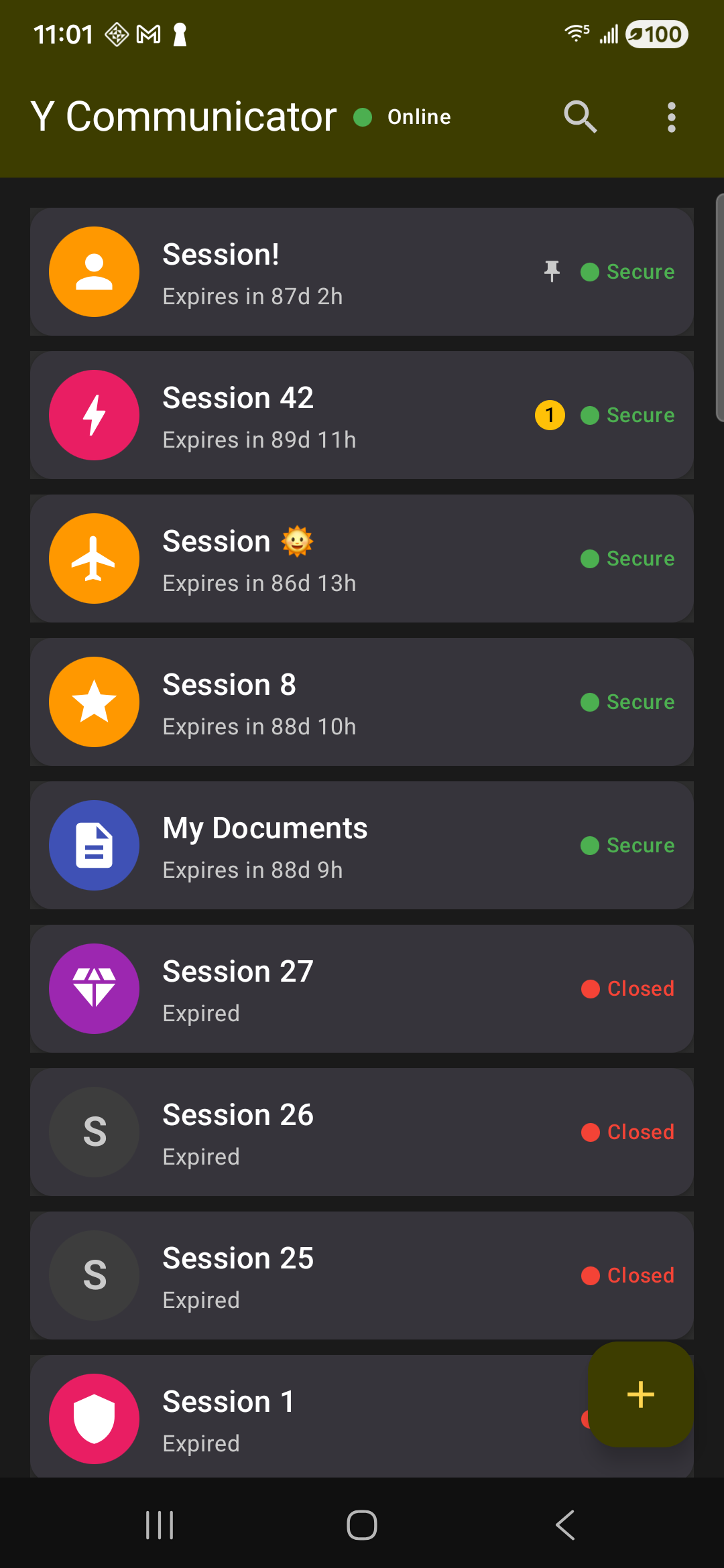
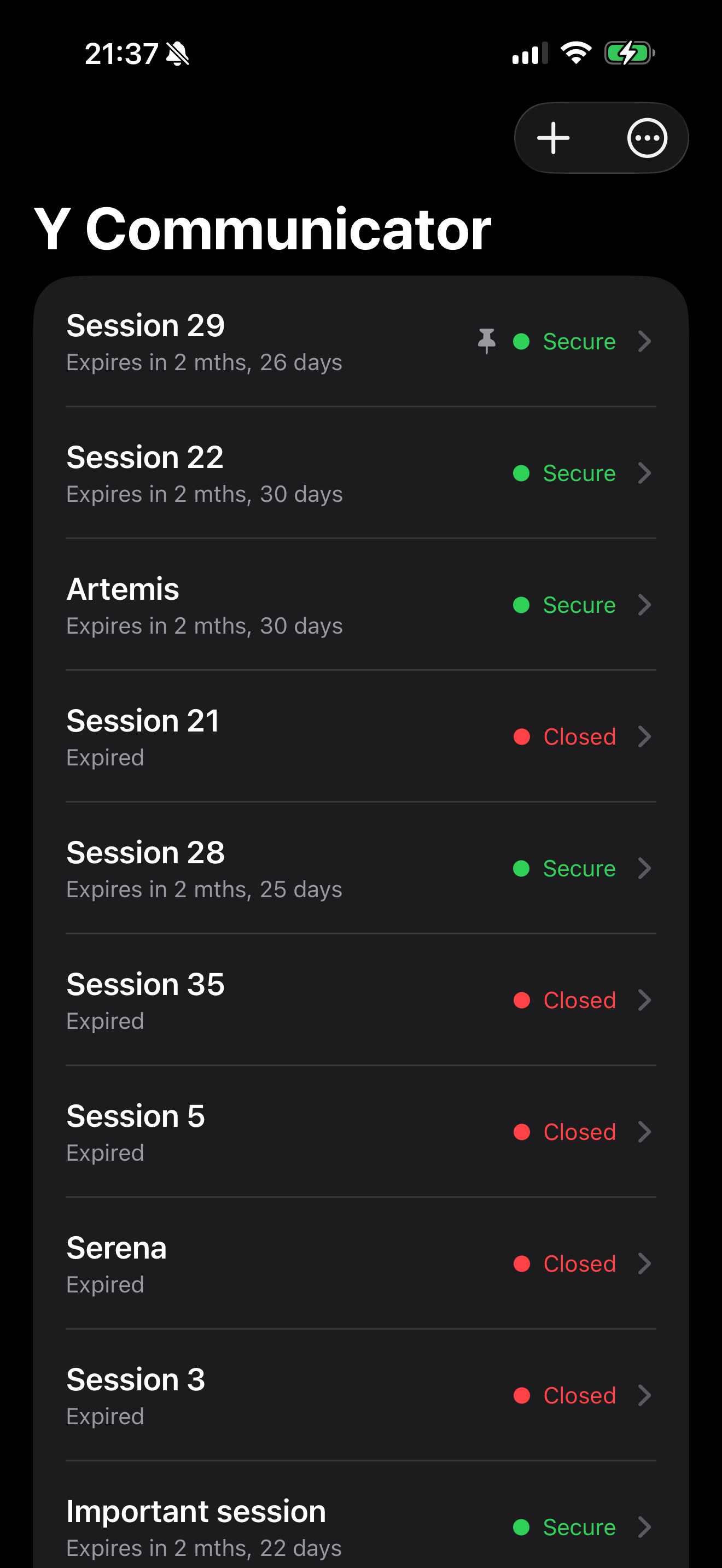
Y Communicator is designed so your private keys stay on your device, each session establishes its own key exchange with the other device, and relay servers don't need your personal information to deliver messages.
No account. No sign-up. Just private messaging.
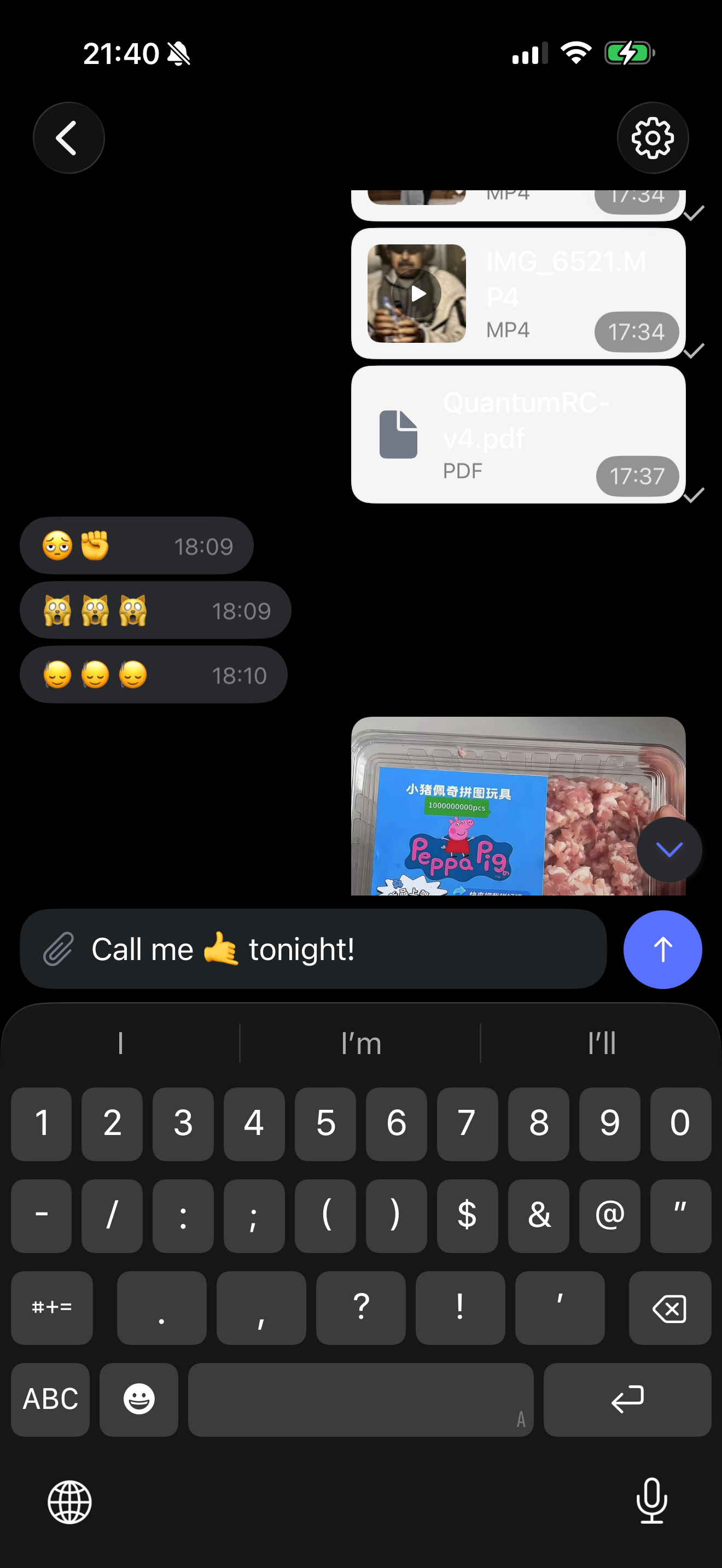
Three steps. No account required at any of them.
Download from the App Store or Google Play. No email, phone number, or registration required — just install and open.
Allow generic push notifications so you do not miss new messages. Notification text is generic - "You got a message" - and never includes message content.
Share a QR code or one-time session link with the person you want to reach. Each session establishes its own key exchange with the other device before messages are sent.
Built so the service does not need your personal information to work.
No phone number, email, or username required. Sessions are established directly between devices, and the service never needs a user profile to operate.
Only your device holds the private keys that protect your messages. Relay servers never receive them and cannot decrypt anything.
Relay nodes handle encrypted delivery — not user accounts or readable content. The system is engineered to minimize what any server can learn.
Uses post-quantum cryptographic components alongside modern authenticated encryption, so messages remain protected against both current and future threats.
Anonymous rotating addresses are designed to reduce conversation linkability over time, making long-term traffic analysis impractical.
Messages are relayed through RAM-only nodes and removed after delivery or expiry. No permanent server-side message storage, by design.
Y Communicator assumes the worst: that servers may be compromised, that traffic may be monitored, and that quantum computers may eventually break today's encryption. Our architecture is designed to remain secure even in these scenarios.
Keys stored in secure hardware (Keychain/Keystore)
Post-quantum + AES-256-GCM encryption
Distributed RAM-only relay nodes
Anonymous rotating addresses
Most messengers now advertise privacy. The key difference is what they require from you before you can even start. Y is built to work without a phone number, email address, or username.
| Feature | Y Communicator | Signal | Telegram | |
|---|---|---|---|---|
| End-to-End Encryption | ✔ | ✔ | ✔ | Optional |
| Post-Quantum Key Exchange | ✔ | Partial | ✘ | ✘ |
| Post-Quantum Signatures | ✔ | ✘ | ✘ | ✘ |
| No Phone/Email Required | ✔ | ✘ | ✘ | Partial |
| No User Accounts | ✔ | ✘ | ✘ | ✘ |
| Anonymous Addressing | ✔ | ✘ | ✘ | ✘ |
| Sender Hidden from Server | ✔ | Partial | ✘ | ✘ |
| Recipient Hidden from Server | ✔ | ✘ | ✘ | ✘ |
| Delivery Address Rotation | ✔ | N/A | N/A | N/A |
| Delete-on-Pickup | ✔ | ✘ | ✘ | ✘ |
"Partial" for Signal post-quantum key exchange reflects Signal's deployed PQXDH design, which adds post-quantum forward secrecy but still relies on classical assumptions for authentication in that revision.
"Partial" for Telegram phone/email requirement reflects Telegram's support for anonymous-number signup via Fragment rather than ordinary phone-free registration.
Available now for iOS and Android. Private messaging with post-quantum encryption — no account or personal information required.
Download Y Communicator. No account required — just install and connect.
Get Y Communicator